
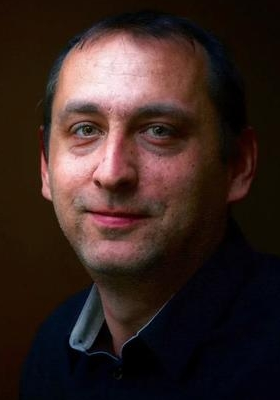
is an Associate Professor at Claude Bernard University Lyon 1 and researcher at the Institute of Light and Matter (ILM), where he leads research on the development and application of Laser-Induced Breakdown Spectroscopy (LIBS). With a strong international reputation in LIBS instrumentation, quantitative analysis, and elemental imaging — particularly in biological and complex materials — he has authored over 150 peer-reviewed publications, holds 5 patents, and has given more than 40 invited talks at international conferences.
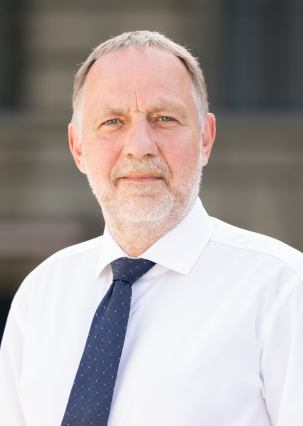
is a full professor for Trace Element and Micro Analysis at the ETH Zürich (Switzerland). He was a JAAS Board chair between 2008 and 2012, the Department Chair of Chemistry (D-CHAB) between 2010 and 2012, and Vice President Research and Corporate Relation of ETH Zurich until 2022. He is also a Member of the German Academy of Sciences Leopoldina since 2014 and a Member of the Swiss Academy of Technical Science 2025. His research is focused on instrument and method development for trace element analysis and isotope ratio determinations, mainly using inductively coupled plasma mass spectrometry (ICP-MS). His work is documented in ca. 50 finished PhD theses, ca. 400 manuscripts and ca. 300 oral presentations.
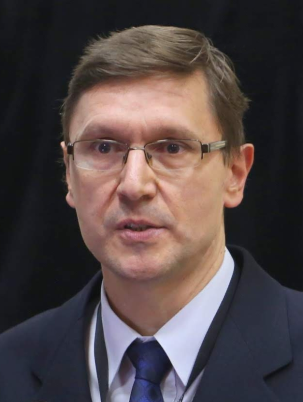
is the head of the MS Proteomics Research Group at the HUN-REN Research Centre for Natural Sciences. His main research topics include mass spectrometry (MS), proteomics and glycoproteomics, as well as bioinformatics. He has developed innovative software tools for mass spectrometry research, including MassKinetics for studying gas-phase ion chemistry and Glycominer for site-specific glycosylation analysis. With over 200 publications in SCI-indexed scientific journals and more than 5,000 citations, his work has made significant contributions to the field of mass spectrometry.
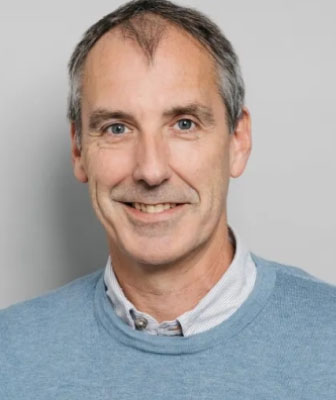
is Professor for Physical Chemistry at the Friedrich-Schiller University and jointly as a department head at the Leibniz IPHT both in Jena, Germany. His research focuses on Raman spectroscopy, near-field optical microscopy, and plasmon enhancement. The major goal is to extend the limits of spatial resolution for label-free techniques, particularly for methods based on tip-enhanced Raman scattering (TERS). His research is mainly driven by questions related to chemical and/or bio-related problems that require structural information at the highest possible resolution. He has over 260 publications. In 2020, he received the Ellis R. Lippincott Award.
University of Graz
Austria
Topic: Single Particle ICP-MS
University of Szeged
Hungary
Topic: Mass Spectroscopy in Proteomics
HUN-REN Energy Research Centre, Hungary
Topic: Microfluidics in Spectroscopy
Hufnagl Chemometrics GmbH, Austria
Topic: Machine Learning in Spectroscopy